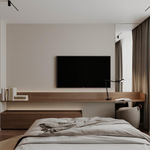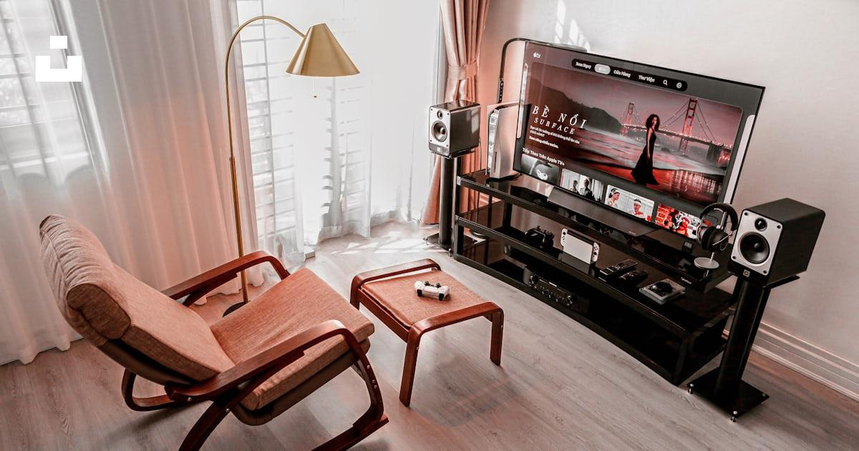
A small room does not have to sacrifice good sound for a compact footprint. Whether you enjoy movies in your bedroom, use a computer at a small desk, or watch television in a studio apartment, the right speakers can deliver clear dialogue and enjoyable music without taking over the space.
Soundbars are popular because they combine multiple speakers into one slim cabinet. However, they are not the only option. Desktop speakers, bookshelf speakers, compact stereo systems, and even smart speakers can provide a suitable listening experience in a small room.
The best alternative depends on what you want to improve, whether that means clearer dialogue, better music playback, balanced bass, or a setup that takes up very little space.
Alternatives to Soundbars
Here are seven options worth considering when choosing an audio setup for a compact room.
1. Desktop Speakers: A Practical Choice for Limited Space
Designed to sit beside a computer monitor, desktop speakers are useful when there is little room for larger audio equipment. They can also work with a small television, laptop, or compatible streaming device, provided the connection options match.
The Creative Pebble desktop speaker series on Amazon is worth exploring if you want a compact setup. Some versions use USB for power and offer an auxiliary input, although features and connections vary by model.
One of the biggest advantages of desktop speakers is convenience. A pair of small speakers can create left-to-right stereo separation, making music and movie audio feel less confined than playback through a single speaker.
Best for: Computer users, casual music listeners, and small bedrooms.
Keep in mind: Desktop speakers are often designed primarily for computers. Check compatibility with your television or other devices before buying.
2. Bookshelf Speakers for a Wider Stereo Experience
If music matters as much as television, bookshelf speakers may be a better choice than a soundbar. Despite their name, they do not have to sit on a bookshelf. A sturdy cabinet or dedicated speaker stand can work just as well if there is enough room around the speakers.
The Edifier R1280-series powered bookshelf speakers on Amazon are worth considering if you want a separate left-and-right speaker arrangement without adding a large receiver to your setup.
Powered speakers have built-in amplification, so they generally do not require a separate amplifier. However, connection options and requirements vary by model, so check the specifications before purchasing.
Separate speakers can create a wider stereo image than a single sound source when positioned properly. This can be especially noticeable with music, where individual instruments and sounds benefit from a sense of space.
Best for: Music lovers and anyone who wants a more spacious stereo presentation.
Keep in mind: Bookshelf speakers need more horizontal space than a soundbar and may require additional cables.
3. Compact TV Speakers for Clearer Dialogue
Not everyone needs a complete entertainment system. Sometimes the main goal is simply to hear dialogue more clearly without adding a large subwoofer or several speakers.
A compact powered speaker or a dedicated television speaker may be enough for a bedroom TV used for news, sitcoms, YouTube, and everyday streaming.
Explore the compact TV speaker options on Amazon and look for convenient volume controls, compatible audio connections, and dialogue enhancement features if clearer speech is your priority.
Before buying new equipment, check your television’s existing audio settings. Some models include voice enhancement, equalizer controls, or night mode, which reduces the difference between quiet dialogue and loud sound effects.
Best for: Viewers who prioritize understandable speech over powerful movie effects.
Keep in mind: Compact TV speakers may not deliver deep bass or an immersive surround sound experience. Connection options differ between products.
4. Smart Speakers for Music and Multipurpose Use
A smart speaker can be useful when one room serves several purposes. It can play music while you work, provide audio in a small kitchen, or stream podcasts without requiring a dedicated entertainment cabinet.
The Amazon Echo smart speaker range offers different sizes and features to suit various spaces. Before choosing one, consider whether voice controls, smart-home integration, and hands-free playback are features you will actually use.
Smart speakers can be convenient standalone music players, but they are not automatically replacements for television speakers. Some models support particular TV or streaming-device connections, while others are intended mainly for independent playback.
Best for: Background music, podcasts, voice-controlled playback, and multipurpose rooms.
Keep in mind: A single smart speaker may not provide the stereo separation or television connectivity you expect. Verify compatibility before purchasing.
5. Compact 2.0 Speaker Systems for Balanced Sound
A 2.0 speaker system consists of two main speakers without a separate subwoofer. It can be a practical compromise if you want better sound than basic TV speakers provide but do not want extra bass equipment taking up floor space.
Browse compact 2.0 powered speaker systems on Amazon and compare their dimensions, inputs, controls, and intended uses.
For small rooms, this arrangement offers a useful balance between sound quality and simplicity. The speakers can sit on either side of a television or computer monitor, provided there is enough space to position them sensibly.
A 2.0 system will not reproduce deep movie effects as strongly as a system with a dedicated subwoofer. However, that may be a reasonable trade-off in an apartment where excessive bass could disturb neighbors.
Best for: Everyday listening, compact television setups, and people who want to avoid excessive bass.
Keep in mind: Some systems require a separate amplifier, while powered models have amplification built in.
6. Headphones for Late-Night Movie Watching
Sometimes the most practical soundbar alternative is a pair of headphones. If you share an apartment, have thin walls, or watch movies after other people have gone to bed, headphones let you enjoy detailed audio without filling the room with sound.
Wireless TV headphones can be convenient, but their connection methods vary. Some use Bluetooth, while others require a dedicated transmitter or base station. Your television may support Bluetooth audio directly, or you may need an additional compatible device.
Compare the wireless TV headphones on Amazon by connection type, comfort, battery life, and audio delay. Low latency is important because a noticeable gap between the picture and dialogue can make movies difficult to follow.
Headphones also allow you to adjust the volume without disturbing others. The main trade-off is that they provide a private listening experience rather than sound that everyone in the room can enjoy together.
Best for: Late-night viewing, shared apartments, and private listening.
Keep in mind: Check your television’s connection options and whether using headphones affects playback through its built-in speakers.
7. Improve Your Existing TV Sound Before Buying Anything
Replacing your current audio setup may not be necessary. In some rooms, adjusting the television’s position and sound settings can improve the listening experience without adding another device.
Start by checking whether furniture is blocking the TV’s speakers or directing sound away from your seating position. If possible, arrange the television so the speakers have a clear path toward the listener.
Next, experiment with the available audio presets. A dialogue or voice mode may improve speech clarity, while a night mode can reduce sudden changes between quiet scenes and loud action. The exact features depend on your television.
Room furnishings can also influence how sound feels. Heavy curtains, rugs, and upholstered furniture may help reduce excessive reflections in rooms with many hard surfaces. They will not eliminate every acoustic issue, but they can make a room more comfortable for listening.
Finally, avoid increasing the volume simply to compensate for unclear dialogue. If voices remain difficult to understand, experiment with speaker placement, television settings, and the output settings of your streaming device before purchasing additional equipment.
Which Soundbar Alternative Should You Choose?
The most suitable option depends on how you use your room and what matters most during everyday listening.
| Your main priority | Alternative to consider |
|---|---|
| Saving desk space | Compact desktop speakers |
| Wider stereo music playback | Powered bookshelf speakers |
| Clearer everyday TV dialogue | Compact TV speaker |
| Music and voice-controlled convenience | Smart speaker |
| Avoiding a separate subwoofer | Compact 2.0 speaker system |
| Watching movies without disturbing others | Wireless TV headphones |
| Improving sound without spending money | TV settings and room adjustments |
Before purchasing, measure the available space and check your television’s audio outputs. HDMI ARC or eARC, optical audio, Bluetooth, USB, and analog connections are not interchangeable, and not every speaker supports every option. A product may look suitable on paper but become inconvenient if it cannot connect directly to your equipment.
Common Mistakes to Avoid in a Small Room
Buying speakers that are too large. Bigger equipment is not always better for a compact bedroom. Consider the dimensions, placement requirements, and distance between the speakers and your listening position.
Choosing based on bass alone. Deep bass can be enjoyable, but it may overwhelm a small room or travel through shared apartment walls. Balanced sound can be more practical for everyday listening.
Ignoring connection options. Confirm that your speakers work with your television, computer, or streaming device before ordering. Depending on the equipment, you might need a compatible cable, adapter, or amplifier.
Placing speakers wherever they fit. Placement affects stereo balance and clarity. Leave enough space around the speakers when recommended by the manufacturer, and try to position them sensibly relative to your seating area.
Expecting surround sound from every alternative. Two speakers can create a satisfying stereo image, but they do not automatically reproduce the experience of a properly configured surround sound system.
Final Thoughts
A soundbar is convenient, but it is not the only way to improve audio in a small room. Desktop speakers are practical for workspaces, powered bookshelf speakers offer a wider stereo presentation, and compact TV speakers may provide the dialogue clarity many viewers need. Smart speakers suit casual listening, while headphones are particularly useful when privacy matters.
For people who have room for two separate speakers, a compact powered stereo pair can be a sensible starting point. If convenience and minimal clutter matter more, desktop or dedicated TV speakers may be a better fit.
Choose according to your equipment, available space, and listening habits rather than paying for features you are unlikely to use.
Amazon Affiliate Disclosure: As an Amazon Associate, I earn from qualifying purchases. If you click on an Amazon.com link in this article and make a purchase, I may earn a commission at no additional cost to you.