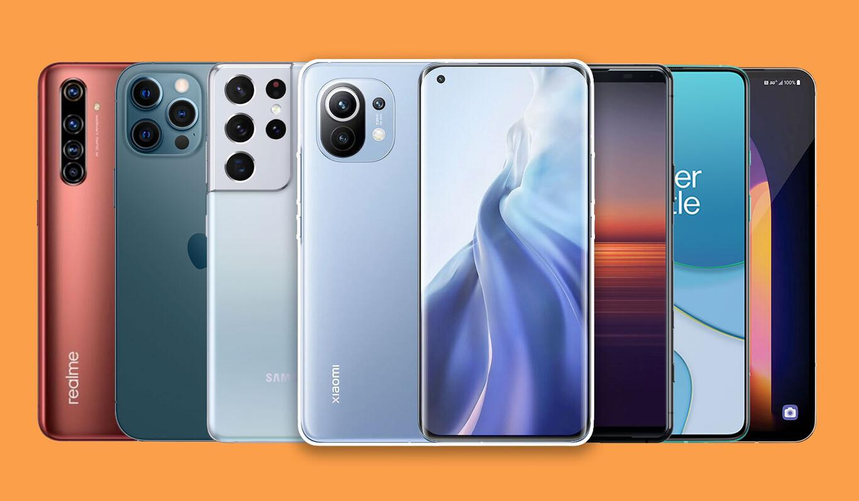
Looking to buy a new smartphone can be overwhelming. Manufacturers often highlight processor speeds, camera megapixels, display refresh rates, charging speeds, and AI features. It’s easy to get caught up in the hype surrounding the latest phone, but more specifications don’t always mean a better device.
Certain features have a greater impact on the everyday smartphone experience than others. Battery life, software support, performance, and camera quality can determine whether a phone remains useful for years. Other features may matter only to a smaller group of users. Understanding which specifications are important to you can help you avoid paying extra for features you rarely use.
Prioritize Your Most-Used Features
Before examining technical details, consider how you plan to use your phone. Someone who wants to photograph family vacations has different needs from someone who plays graphics-intensive mobile games or primarily uses a phone for social media and email.
For most buyers, battery life, display quality, performance, camera capabilities, storage, and software support deserve the most attention. These features influence everyday use more than many of the additional specifications listed on a product page.
If you’re starting your search, compare unlocked smartphones on Amazon.com to find models that fit your budget, preferred operating system, and usage habits. Focus on what each phone can do rather than simply comparing numbers on a specification sheet.
Processor
The processor powers most smartphone functions, from opening applications and switching between tasks to editing photos, playing demanding games, and running certain AI features. A capable processor can keep a phone responsive and help it handle newer applications as software requirements increase.
However, the fastest processor isn’t always necessary, even for users who perform demanding tasks occasionally. For web browsing, video streaming, messaging, and email, many midrange phones already provide a smooth experience. Paying more for a flagship processor may offer little noticeable benefit for these activities.
The advantages of a high-end processor become clearer when playing graphics-intensive games, editing videos, working with large photos, or using demanding applications. Advanced processors can also support certain on-device AI functions and may provide more performance headroom for long-term ownership.
When comparing processors, avoid relying exclusively on marketing claims. Read independent reviews, examine benchmark results, and pay attention to real-world performance, heat management, and sustained speed. Comparing flagship Android smartphones with unlocked Apple iPhones can help you explore different options.
What matters: Consistent real-world performance, power efficiency, and effective thermal management.
What to avoid: Assuming a processor is automatically better simply because it achieves a higher benchmark score.
RAM
RAM allows a smartphone to keep applications and tasks available in the background. Having enough RAM can make switching between applications smoother and reduce the need to reload them.
However, a larger RAM capacity doesn’t automatically guarantee better performance.
Many phones can handle common tasks such as browsing, messaging, email, and media playback without requiring enormous amounts of memory. A device with less RAM but well-optimized software can perform better than a phone with more memory and poor optimization. Additional RAM can be beneficial for demanding games, intensive applications, and multitasking.
Some manufacturers also advertise virtual RAM, which uses part of the phone’s internal storage to supplement memory. This is not equivalent to physical RAM and generally cannot deliver the same performance.
When comparing devices, browse Android smartphones with 8GB RAM or more, but consider the processor, software optimization, and storage capacity as well.
What matters: Enough physical RAM for your applications and effective memory management.
What to avoid: Chasing the highest RAM figure without considering software optimization or treating virtual RAM as equivalent to physical memory.
Camera Resolution and Zoom
Smartphone manufacturers frequently promote camera resolution as a major selling point. However, a 50MP, 108MP, or 200MP camera doesn’t automatically produce better photographs.
Resolution can help capture fine details when lighting and processing are good, but sensor size, lens quality, autofocus, stabilization, and image processing also influence the final result.
A well-designed 50MP camera can outperform a higher-resolution camera with a smaller sensor or less effective image processing. The same principle applies to telephoto and periscope cameras, which are designed to photograph distant subjects.
Digital zoom and optical zoom also work differently. Optical zoom uses a telephoto lens to capture distant subjects with useful detail. Digital zoom crops and enlarges an image, which can reduce sharpness and clarity at higher magnifications.
Independent reviews and sample photographs can reveal which phones perform well in daylight, low light, and challenging conditions. If you regularly record videos, consider stabilization, microphone quality, and video resolution, too.
For photography-focused options, compare smartphones with advanced cameras and smartphones with optical zoom.
What matters: Sensor quality, image processing, low-light performance, and optical zoom when needed.
What to avoid: Assuming that more megapixels or a higher digital zoom number automatically means better image quality.
Display Refresh Rate
A smartphone display’s refresh rate is measured in hertz (Hz). A 60Hz display refreshes up to 60 times per second, while 90Hz, 120Hz, and 144Hz displays can provide smoother scrolling, animations, and supported games.
Once you’re accustomed to a higher refresh rate, a 60Hz screen may feel less responsive in comparison. However, the difference is less important for people who mainly read, send messages, make calls, or watch videos.
Overall display quality matters just as much. Brightness, color accuracy, contrast, outdoor readability, and power efficiency all influence the viewing experience.
Peak brightness figures can also be misleading because the maximum may only be available under specific conditions. Independent reviews are useful for understanding how a display performs in everyday environments.
If a smoother display is important to you, compare 120Hz smartphones on Amazon.com. Consider battery life and overall display quality before paying extra for a higher refresh rate.
What matters: Readability, color accuracy, contrast, and a refresh rate suited to your needs.
What to avoid: Paying significantly more for a higher refresh rate without considering the display’s overall quality and battery consumption.
Battery Capacity and Charging Power
Battery capacity is usually measured in milliamp-hours (mAh). A larger battery can store more energy, but capacity alone doesn’t determine how long a phone will last.
Power consumption also depends on the processor, display, brightness settings, network conditions, and software optimization. A phone with a smaller battery may last longer than a competing model if it uses power more efficiently.
Charging speed, measured in watts, is another commonly advertised specification. Higher wattage can allow faster charging, but actual results depend on the phone’s charging system, battery temperature, current charge level, and compatible adapter.
Independent reviews can help you understand real-world battery endurance and charging times. Paying extra for a larger battery or faster charging may not be worthwhile if the phone performs poorly under everyday conditions.
A power bank can be a practical alternative for people who spend long periods away from an outlet. Compare USB-C power banks and fast USB-C phone chargers for compatible options.
What matters: Real-world battery life, efficient power consumption, and reliable charging performance.
What to avoid: Judging a phone exclusively by its advertised battery capacity or charging wattage.
Storage
Storage determines how much data a phone can hold, including photographs, videos, applications, downloads, and offline content. Running out of space can become a daily inconvenience, making storage an important consideration when buying a smartphone.
A phone with limited storage may fill up quickly if you record many videos, install large games, download entertainment, or keep years of photographs on the device.
Cloud storage is an alternative, but it may require an internet connection and additional subscription costs. Most smartphones also lack a microSD card slot, so expandable storage should not be assumed.
Light users who rely on cloud services may be comfortable with less storage. People who take many photographs, record videos, or intend to keep their phones for several years may benefit from a higher-capacity model.
Remember that the operating system and preinstalled applications occupy some of the advertised capacity, leaving less space for personal files.
Before buying, compare 128GB smartphones with 256GB smartphones to find a suitable balance between capacity and price.
What matters: Enough usable space for your current habits and future needs.
What to avoid: Paying for storage you won’t use or choosing a capacity that’s too limited for your regular downloads and media.
Software Updates
Software support is essential for keeping a phone secure, compatible with applications, and useful over time. However, it can be easy to overlook because manufacturers often emphasize hardware features instead.
Security updates help address newly discovered vulnerabilities, while operating system updates can introduce features, improve compatibility, and refine performance.
Update policies vary by manufacturer and model. Some smartphones receive support for considerably longer than others. Operating system upgrades and security updates may also have separate support periods.
Before buying, research the official update policy for the exact model. Consider when its support period began rather than looking only at the number of years advertised.
For Android options, compare Google Pixel smartphones and Samsung Galaxy smartphones. iPhone buyers can browse unlocked Apple iPhones. Check the manufacturer’s official support information before making a decision.
What matters: Reliable security updates and a clear commitment to ongoing software support.
What to avoid: Choosing a phone based on launch-day features without considering how long it will continue receiving updates.
Build Materials and Water Resistance
A phone’s durability depends on its materials, construction, design, and how it is used. Aluminum and glass can provide a premium appearance, but glass can crack and surfaces can scratch. Polycarbonate designs may offer better resistance to certain impacts, although durability varies by construction.
Water and dust resistance are commonly described through an IP rating. The specific rating indicates the level of protection tested under defined conditions, but it doesn’t make a device indestructible or guarantee protection in every situation.
Resistance can diminish through normal wear, impact damage, or repairs. Liquid damage may also be excluded from a manufacturer’s warranty.
Repair costs and screen protection are worth considering before buying. A phone that is expensive to repair can become costly after an accidental drop. A suitable case and screen protector can reduce the risk of damage.
Compare protective smartphone cases and tempered glass screen protectors, ensuring that the accessories fit your specific phone model.
What matters: Appropriate protection, reasonable repair costs, and a design suited to your everyday environment.
What to avoid: Assuming premium materials or water resistance make a phone immune to damage.
AI Features
Artificial intelligence has become an important marketing point for many smartphones. Depending on the model, AI features may include photo editing, call transcription, writing assistance, real-time translation, voice commands, and content summarization.
Some of these features can be useful. Call transcription may help with meetings, translation can assist during international travel, and photo editing tools can simplify common adjustments.
However, not every AI feature is worth paying extra for. Some require an internet connection, have usage limits, depend on a subscription, or support only selected languages and regions. Availability can also differ between models from the same manufacturer.
Terms such as AI-powered and AI-enhanced don’t explain exactly what a feature does or how reliably it works.
If you’re considering a phone with AI capabilities, identify the tools you expect to use and check their availability in your country and preferred language. You can browse AI-enabled smartphones and compare their listed features with the manufacturer’s official information.
What matters: Practical features, reliable results, privacy controls, and transparent limitations.
What to avoid: Paying more simply because a phone advertises numerous AI features you may never use.
5G and Wi-Fi
Modern smartphones support several connectivity features, but newer standards don’t automatically guarantee better performance.
Wi-Fi standards influence potential wireless network speeds, although actual performance depends on your router, internet connection, distance, and network congestion. Similarly, 5G can provide fast mobile data, but performance varies with carrier coverage, supported frequency bands, and local network conditions.
Some 5G technologies, including millimeter-wave connections, can deliver very high speeds under suitable conditions but have more limited coverage than other frequency bands.
Other features worth checking include NFC for contactless payments, Bluetooth compatibility, eSIM support, and compatibility with existing accessories.
When shopping, compare unlocked 5G smartphones and confirm that the device supports the necessary frequency bands for your carrier. This is particularly important when purchasing an imported phone.
What matters: Connectivity features that work with your carrier, home network, payment services, and accessories.
What to avoid: Paying extra for newer networking standards without checking compatibility and real-world performance.
Benchmark Scores and Other Specifications
Benchmarks provide a standardized way to compare certain aspects of smartphone performance. They can be useful when evaluating similar phones, particularly for gaming and demanding applications.
However, benchmark scores reflect specific tests under controlled conditions. They cannot fully describe battery life, camera quality, software reliability, or how comfortable a phone is to use.
Other advertised specifications can also be misleading. Extremely high digital zoom figures, long lists of camera modes, or impressive-sounding technical numbers may not provide meaningful benefits in everyday use.
Independent reviews can help explain differences between competing phones. Instead of relying on one score, examine how each device performs in the activities that matter most to you.
If you’re comparing several models, browse unlocked smartphones across different price ranges. Before ordering, review the final price, seller information, warranty, and return policy.
What matters: Tested performance and features that support your everyday needs.
What to avoid: Making a purchasing decision based entirely on an isolated benchmark score or marketing claim.
Which Phone Specifications Should You Prioritize?
Your priorities should depend on how you intend to use your smartphone.
| Your main priority | Specifications worth checking |
|---|---|
| Everyday use | Battery life, display quality, performance, and software support |
| Photography | Sensor quality, image processing, low-light performance, and stabilization |
| Mobile gaming | Processor, sustained performance, thermal management, refresh rate, and battery life |
| Work and multitasking | RAM, storage, battery life, and connectivity |
| Travel | Battery life, charging, network compatibility, camera quality, and durability |
| Long-term ownership | Software updates, storage capacity, battery health, and repairability |
| Budget shopping | Real-world performance, essential features, and remaining software support |
If you’re shopping on a budget, compare budget unlocked smartphones with midrange Android phones. A reasonably priced phone that handles your most common tasks well may provide better value than an expensive flagship with features you rarely use.
The best phone isn’t necessarily the one with the most specifications. It’s the one that meets your needs without making you pay for unnecessary extras.
How to Compare Two Phones Before Buying
When comparing two similar phones, approach the decision systematically rather than ranking every specification from highest to lowest.
First, consider the price difference and decide whether the more expensive model offers features you’ll use regularly. Next, compare independent battery and camera tests, which can reveal differences that are difficult to identify from a specification sheet alone.
Then examine software support, storage capacity, display quality, repair options, and connectivity. These factors can influence the cost and convenience of owning a phone over several years.
Finally, identify the compromises. One model may have an excellent camera but weaker battery life, while another may offer strong performance but less storage.
To explore the available options, compare unlocked iPhone models, Samsung Galaxy phones, and Google Pixel phones. Product listings and configurations can vary, so double-check the exact model, storage capacity, network compatibility, seller, and warranty before purchasing.
Final Thoughts
Smartphone marketing can encourage buyers to chase the biggest numbers, newest features, and longest specification lists. Yet the most important specifications are usually the ones that influence everyday use: battery life, consistent performance, camera quality, display quality, sufficient storage, and software support.
A higher refresh rate, faster processor, advanced AI tools, and faster charging can be worthwhile upgrades when they match your needs. They may also be unnecessary expenses if they don’t improve your everyday experience.
Before buying your next phone, identify your priorities, read independent reviews, and compare the complete experience rather than individual numbers. A carefully chosen midrange smartphone may serve you better than an expensive flagship with features you rarely use.
Amazon Affiliate Disclosure: As an Amazon Associate, I earn from qualifying purchases. If you click on an Amazon.com link in this article and make a purchase, I may earn a commission at no additional cost to you.