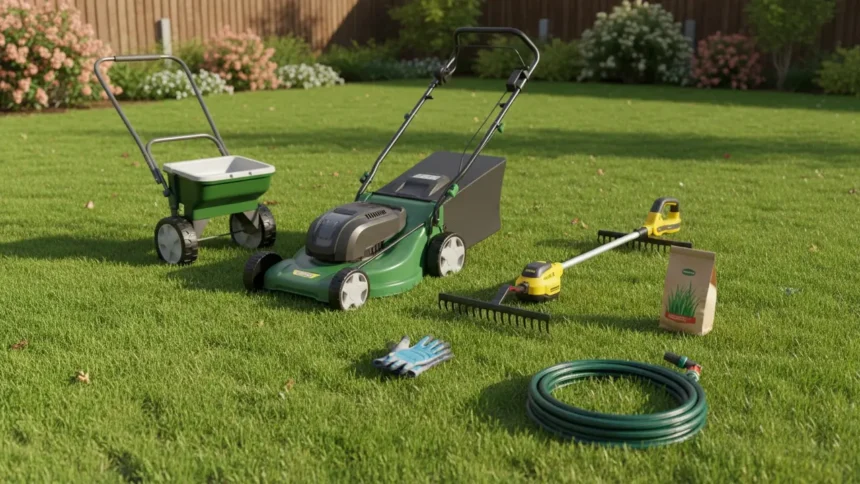
Owning a home with a lawn means you have a little extra responsibility beyond cutting the grass every weekend. Leaves gather in unwanted places, weeds invade pathways, dry patches form in hot weather, and grass that once grew happily on its own soon requires regular care. The question for first-time homeowners is figuring out what lawn-care equipment to buy before investing in a ton of unnecessary tools.
The good news is that you don’t need a garage’s worth of equipment to keep your lawn looking good.
A few well-chosen pieces of gear will get the job done, whether it’s sweeping up leaves, edging a driveway, or keeping thirsty plants properly hydrated.
This guide looks at the best lawn-care tools for first-time homeowners, what they do, and some suggestions for finding the right balance between what you need and what you can afford.
1. Lawn Mower: The Foundation of Your Equipment Collection
A lawn mower should be your first big investment if you’re the designated grass-cutter for a home with a lawn. However, you need to think about the size of the property and the likely terrain before choosing between a push, electric, or gas-powered machine. Mowers also vary in terms of cutting height, grass collection capacity, and other features.
- Push reel mower: A practical tool for small, relatively flat lawns. It doesn’t need fuel but requires more effort to use on long lengths of tall grass. Browse push reel mowers on Amazon.com (paid link)
- Electric or battery-powered mower: Excellent for average-sized residential lawns that need regular attention. Browse electric and battery lawn mowers on Amazon.com (paid link)
- Gas-powered mower: Consider this option for large lawns or particularly rough terrain. Browse gas-powered lawn mowers on Amazon.com (paid link)
Before buying, measure the area you’ll need to cut rather than the whole property. You probably won’t be mowing over driveways, patios, or flower beds, so those shouldn’t be included in your calculations.
2. String Trimmer: For the Edges Your Mower Can’t Reach
No matter how well you pick your mower, you’ll always find bits of grass left behind around fence posts, tree trunks, and other garden features. A string trimmer lets you get into these tight spots without having to resort to using shears.
If you’re a first-time buyer looking for something simple to maintain, a battery-powered model is a good choice. Alternatively, you could go with a corded electric trimmer for small jobs or a gas-powered model for large properties.
- Browse cordless string trimmers on Amazon.com (paid link)
- Browse corded electric string trimmers on Amazon.com (paid link)
- Browse gas-powered string trimmers on Amazon.com (paid link)
Look for a comfortable grip, manageable weight, and easy line changes if you’re buying a trimmer for the first time. You probably don’t need a commercial-grade tool if you have a small backyard to look after.
Beginner tip: Keep your trimmer’s rotating head well away from tree bark and other plants, as the line can cut into them unexpectedly.
3. Garden Hose and Nozzle: Easy Watering for the Casual Gardener
A good nozzle on a hose is surprisingly useful around the house and garden.
It can water your lawn, rinse garden furniture, and clean spades and other tools. You probably want something you can use every day, so avoid buying an ultra-tough hose that’s too heavy to carry. Likewise, a nozzle with multiple settings is more versatile than one with a fixed jet.
- Browse garden hoses on Amazon.com (paid link)
- Browse adjustable garden hose nozzles on Amazon.com (paid link)
For large lawns, a sprinkler might be a more efficient way to water your lawn. Oscillating sprinklers are good value for most rectangular lawns, whereas rotating models can be a better choice for other shapes.
- Browse oscillating lawn sprinklers on Amazon.com (paid link)
- Browse rotating lawn sprinklers on Amazon.com (paid link)
How much and how often you water depends on your grass type, the local climate, and local bylaws. Water your lawn thoroughly when it needs it rather than giving it a light spray every day. Watering early in the day also reduces the risk of disease.
4. Leaf Rake: An Inexpensive Tool with Multiple Uses
A leaf rake is simple enough for a first-time buyer to use but can clear away a surprising amount of garden waste.
It’s good for gathering up leaves, short grass, and small twigs. You don’t need to buy a powered model to do the job, although you might want to consider one if you have a large lawn to look after regularly. Choose a rake with a broad surface and flexible edges, plus a comfortable grip so you don’t have to bend excessively while you work.
A leaf rake isn’t the same as a garden or soil rake. The latter is used for breaking up clods of earth and is sturdier than a leaf rake, but it’s also much harder work.
Remove dead leaves and twigs as often as you can, particularly if you have a lot of large trees. Left alone, the build-up of rotting leaves will smother the grass below.
5. Lawn Edger: Making Tidy Edges Around Your Driveway
Your lawn might look great, but if it curves around the edge of your driveway or has poor edging, it can make your whole yard look untidy. An edger lets you create a clean, defined path between your grass and other surfaces.
Manual models tend to be cheaper and are best for small jobs, whereas powered edgers can be a good choice for large areas or to make edging easier.
- Browse manual lawn edgers on Amazon.com (paid link)
- Browse powered lawn edgers on Amazon.com (paid link)
You can also buy string trimmers with an edging function built in. If you’re looking to limit your initial outlay, a multipurpose tool might be a good choice.
You don’t need to edge your lawn every week. For most first-time buyers, it’s a task that can be put off until the grass starts to creep up the edge of a path or patio.
6. Garden Spreader: Applying Fertilizer and Seed More Evenly
It’s easy to sprinkle fertilizer or grass seed carelessly over your lawn, but it’s much harder to get an even spread if you do it by hand. A spreader is a good investment if you want to avoid bare patches and areas of excessive growth.
- Broadcast spreader: Ideal for most residential lawns. Browse broadcast spreaders on Amazon.com (paid link)
- Drop spreader: A good choice for smaller areas or for use near the edges of flower beds and other features. Browse drop spreaders on Amazon.com (paid link)
Choose a spreader with a comfortable pushing action and adjustable settings so that you can get an even spread across your entire lawn. Always follow the manufacturer’s advice on how much product to put in the hopper and whether you need to water the lawn after spreading.
You probably won’t need a spreader when you first buy a home with a lawn. If your grass needs occasional fertilizing or seeding but isn’t extensive, you might be able to wait before buying a spreader or borrow one from a friend.
7. Hand Weeder and Garden Trowel: Small Tools for Small Jobs
You don’t always need a large machine to clear weeds or reseed bare patches in your lawn. A hand weeder and a sturdy garden trowel are both useful tools that take up little space in your shed.
Use a hand weeder to loosen the roots of unwanted plants so that they can be removed easily. A trowel is good for digging small holes and for filling in minor divots.
- Browse hand weeders on Amazon.com (paid link)
- Browse garden trowels on Amazon.com (paid link)
- Browse garden hand tool sets on Amazon.com (paid link)
Look for tools with comfortable grips and strong metal ends that won’t bend easily when you’re working. They should both last for years and fit easily into a drawer when you’re not using them.
Identify a weed before trying to remove it or treat the whole plant as if it’s an invasive species. Different weeds need different approaches, and using the wrong method can do more harm than good.
8. Lawn Sprinkler Timer: An Optional Extra for Scheduling
A timer for your sprinkler system isn’t an essential buy, but it can make caring for your lawn much easier.
Most timers are a simple hose attachment, although more advanced models can control multiple sprinklers.
- Browse automatic garden hose timers on Amazon.com (paid link)
- Browse multi-zone irrigation controllers on Amazon.com (paid link)
Check the manufacturer’s advice before buying a timer to make sure it’s compatible with your hose and sprinkler setup.
Timers shouldn’t be used to water your lawn automatically without any consideration for its needs. Rainfall, temperature changes, and local bylaws can all affect how often you should water your lawn.
Using a hose and adjusting the nozzle might be all you need for a small lawn. Think about the extra cost and storage space before deciding if a timer is a good investment.
9. Protective Equipment: Don’t Forget the Basics
Your tools can throw small rocks and other garden debris at you when in use, so you should always buy basic safety equipment when investing in lawn care.
A first-time buyer’s kit should include:
- Safety glasses: To protect your eyes from flying garden waste. Browse protective safety glasses on Amazon.com (paid link)
- Closed-toe shoes with a good grip: To help protect your feet. Browse outdoor work shoes on Amazon.com (paid link)
- Gloves: For general protection when using tools and removing weeds. Browse gardening work gloves on Amazon.com (paid link)
- Hearing protection: If you’re using powered tools that produce a lot of noise. Browse hearing protection on Amazon.com (paid link)
- Long trousers: When appropriate for the tool and working conditions. Browse outdoor work trousers on Amazon.com (paid link)
Always read the manufacturer’s advice before using powered tools. Keep children and pets well away from equipment, turn it off when clearing away garden waste, and never refuel a hot engine.
Follow the safety advice that comes with the tools you buy, as requirements can vary between manufacturers.
How to Build a Lawn-Care Toolkit Without Overspending
There’s no need to buy everything available at once. Start by thinking about the jobs your lawn needs most and buy the tools to do them. You can always buy additional equipment later once you’re more confident about caring for your lawn.
| Priority | Tool | Why It Belongs on the List |
|---|---|---|
| Essential | Lawn mower (paid link) | Maintains grass height |
| Essential | String trimmer (paid link) or suitable manual alternative | Handles awkward edges and tight spots |
| Essential | Hose and nozzle (paid link) or an appropriate watering system | Supports watering when needed |
| Essential | Leaf rake (paid link) | Clears leaves and light debris |
| Essential | Basic safety gear (paid link) | Helps protect you during maintenance |
| Add when needed | Lawn edger (paid link) | Improves borders along paths and driveways |
| Add when needed | Spreader (paid link) | Helps apply seed and lawn treatments evenly |
| Add when needed | Sprinkler timer (paid link) | Automates a regular watering routine |
| Add when needed | Hand weeder and trowel (paid link) | Handles small repairs and individual weeds |
The best way to shop is to match individual items to regular tasks. If a neighbor has a suitable spreader to borrow, for example, you might want to put off buying one for as long as possible. Equipment such as core aerators and powered dethatchers can also be hired when the lawn actually needs the work rather than buying and storing them when they’re not in use.
What First-Time Homeowners Should Know Before Their First Mow
A few good habits will extend the life of your equipment and help you avoid extra work.
Check the lawn before you start mowing. Remove any potential projectiles such as stones, dead branches, toys, and anything else that could damage the mower.
Don’t try to cut too much grass at once. Leaving too long a strip of grass for the mower to deal with can leave the lawn looking worse than before. Stick to the recommended cutting height for your lawn type and don’t cut when the ground is frozen or very wet.
Clean your equipment after every use. Remove any grass or dirt according to the manufacturer’s advice and store it somewhere secure and dry.
Keep an eye on your blades. Dull mower blades can leave your grass looking torn rather than cleanly cut. Disconnect the power or follow the manufacturer’s advice before inspecting the blades.
Get to know your lawn before buying treatments. Yellow patches, weeds, and bare areas can have many causes, so investigate the problem before spending money on lawn treatments.
Final Thoughts
The best lawn-care equipment for first-time homeowners is equipment that makes lawn care easier without taking up too much room in a shed or garage. A mower, trimmer, hose, rake, and basic safety gear should be more than enough for most established lawns.
An edger, spreader, or sprinkler timer can be added if the property and your maintenance habits require them, but avoiding unnecessary purchases will save you time and money over the long term.
Amazon Affiliate Disclosure: As an Amazon Associate I earn from qualifying purchases. This article contains affiliate links, which means we may earn a commission if you purchase through qualifying links, at no additional cost to you.