When purchasing a new smartphone, the first few months are often the most enjoyable. Between the bright display, capable camera, and fast performance, there is not much to complain about. The more relevant question is whether the phone will remain useful and reliable four years later.
A phone that lasts is not necessarily the one with the strongest specifications. It is the device that continues to handle everyday tasks comfortably, receives necessary security updates, maintains reasonable battery life, and provides enough storage for your needs.
These are the models and qualities worth considering if you want to buy a phone and keep it for the long term.
What to Look For When Buying a Phone to Keep for Four Years
Keeping a phone for four years requires a different approach than replacing it every year or two. While impressive specifications may look appealing on paper, battery life, software support, and repair costs can make a significant difference over time.
Four factors deserve particular attention.
Software support: A phone may continue to turn on and run applications after its manufacturer stops providing updates. However, continued security support is important for people who use their devices for banking, email, shopping, and storing personal information.
Battery lifespan: Battery endurance gradually declines with use and charging cycles. Eventually, a phone that once lasted all day may need to be charged more frequently. Battery replacement can help extend the useful life of an otherwise capable device.
Performance: A phone’s ability to handle newer applications and software depends partly on its processor, RAM, and overall hardware design. A capable device can provide more room for changing needs over several years.
Storage capacity: The amount of built-in storage determines how many photographs, videos, applications, and other files you can keep on your device. People who regularly record videos or save large amounts of media locally may benefit from additional space.
A balanced combination of these four characteristics is essential when choosing a phone intended to remain useful for at least four years.
Three Phones to Consider for Long-Term Use
There is no single smartphone that suits everyone. People who prefer iOS have different priorities from those who use Android, and individual needs vary depending on budget, applications, and daily habits.
Google Pixel 10 — For Those Who Want Android With Long Software Support

Google Pixel 10
The Google Pixel 10 is worth considering for Android users who value Google’s software experience, camera features, and integrated AI tools.
Google promises seven years of operating-system and security updates for Pixel 8 and later devices, measured from when each model first became available on the Google Store in the United States. This support commitment gives eligible Pixel phones the potential to remain supported well beyond a four-year ownership period.
Before purchasing, check the exact model and its eligibility using Google’s official Pixel update policy.
Software updates can extend a phone’s useful life, but they cannot eliminate battery degradation or guarantee that every application will perform perfectly throughout the entire support period.
The Pixel lineup may appeal to people who enjoy Google’s camera processing and a relatively straightforward Android interface.
Before choosing the Pixel 10, consider battery endurance, storage capacity, repair options, and the price of the configuration you want.
Review Google Pixel 10 options on Amazon.com
Samsung Galaxy S26 — For Samsung Flagship Fans

Samsung Galaxy S26
The Samsung Galaxy S26 is an option for buyers who want a premium Android experience with Samsung’s One UI interface and a broad selection of features.
The Galaxy experience may suit people who frequently switch between applications, take photographs, watch videos, or use productivity tools. Higher-end models in the Galaxy range may offer additional camera and multimedia capabilities, depending on the configuration.
Software support is another important consideration. Check the official policy for the exact model and regional variant before buying, rather than relying on assumptions about how long it will receive updates.
Review Samsung Galaxy S26 options on Amazon.com
One factor worth considering before choosing a flagship phone is the potential cost of repairs. Research screen replacement, battery replacement, and other service costs before committing to several years of ownership.
iPhone 17 — For Those Who Want to Stay Within Apple’s Ecosystem

Apple iPhone 17
For people who already use an iPhone, purchasing another recent iPhone can make the transition easier. Existing accessories, familiar settings, application purchases, and data synchronization may help simplify the experience.
The iPhone 17 is worth considering for buyers who want Apple’s hardware and software experience, a modern processor, and a high-quality display.
Apple does not provide the same general seven-year update commitment as Google does for eligible Pixel devices. Buyers should check current software compatibility information for the specific iPhone model instead of assuming a guaranteed support period.
Battery replacement options also deserve attention. Battery health can directly affect how convenient a phone remains after several years of use.
Review iPhone 17 options on Amazon.com
The Battery Test: Will You Still Like It After Year Three?
Battery health is often one of the most noticeable differences between a new phone and an older device. As a battery ages and holds less charge, you may need to recharge more frequently, particularly if you use navigation, watch videos, play demanding games, or rely heavily on mobile data.
Rather than choosing a phone based only on battery capacity, consider the entire ownership experience.
- Prioritize good real-world battery endurance.
- Avoid exposing the phone to excessive heat whenever possible.
- Use reputable chargers and compatible charging accessories.
- Check battery-health information when the device provides it.
- Research the availability of battery replacement services.
A replacement battery can cost significantly less than purchasing another phone and may extend the life of a device that otherwise meets your needs. Costs and service availability vary by model and region.
How Much RAM and Storage Do You Need?
A phone intended to last four years should have enough RAM and storage to accommodate changing requirements.
RAM helps a device manage active applications and switch between tasks. Storage determines how much media, software, and other data can be saved locally. These specifications serve different purposes, and neither can substitute for the other.
For someone who mainly streams content and stores photographs in the cloud, 256GB may be sufficient. People who regularly record videos or keep large amounts of content offline may prefer a larger capacity, such as 512GB.
There is no single RAM figure that guarantees smooth performance for four years. Application requirements, the operating system, the processor, and the phone’s memory management all influence the experience.
Before paying extra for a higher-end configuration, consider the phone’s overall capabilities and whether the additional specifications will make a meaningful difference to your daily use.
Don’t Forget About Repairability
A phone can remain powerful and receive security updates but become impractical to use if a broken screen costs too much to replace.
Before purchasing, investigate the repair services available in your area, including screen and battery replacement. Check warranty terms and the cost of common repairs.
A protective case and screen protector can help reduce the risk of accidental damage. Water resistance is also useful, but it should not be treated as permanent protection against liquid damage. Seals can deteriorate over time, and warranty coverage for liquid damage varies.
For a phone intended to last several years, affordable repairs and access to service are important considerations alongside performance and software support.
A Practical Breakdown of Long-Term Phone Value
A phone with a low purchase price can become more expensive to maintain, while a costly flagship may offer features that some users rarely need.
To compare long-term value, consider the purchase price, possible battery replacement, repair expenses, accessories, and recurring services such as cloud storage. Then estimate how long the device is likely to meet your needs.
A slightly more expensive phone with a longer software-support period may be a better investment than a cheaper alternative that becomes unsupported early. On the other hand, a premium flagship may not be worthwhile if a more affordable phone already handles your everyday tasks comfortably.
The best value comes from choosing a device that satisfies your requirements without making you pay extra for features you are unlikely to use.
Final Thoughts: Buy for the Fourth Year, Not Just the First Day
When choosing a phone for long-term ownership, start by comparing software support and battery service. Then evaluate performance, storage options, repairability, and price.
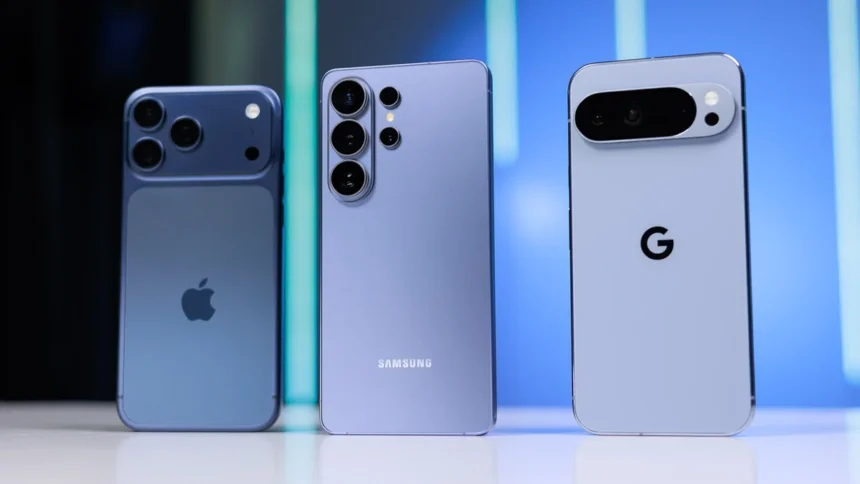
The Google Pixel 10 is worth considering for buyers who prioritize Google’s software-support commitment. The Samsung Galaxy S26 offers a premium Android experience, while the iPhone 17 may suit people who prefer Apple’s ecosystem.
Before purchasing, verify the update policy, storage configuration, warranty coverage, and repair options for the exact model. The best long-term phone is one that feels right today and can continue meeting your needs four years from now.
Amazon Affiliate Disclosure: As an Amazon Associate, I earn from qualifying purchases. Should you purchase a smartphone through one of the Amazon.com links in this article, I may earn a commission from Amazon.