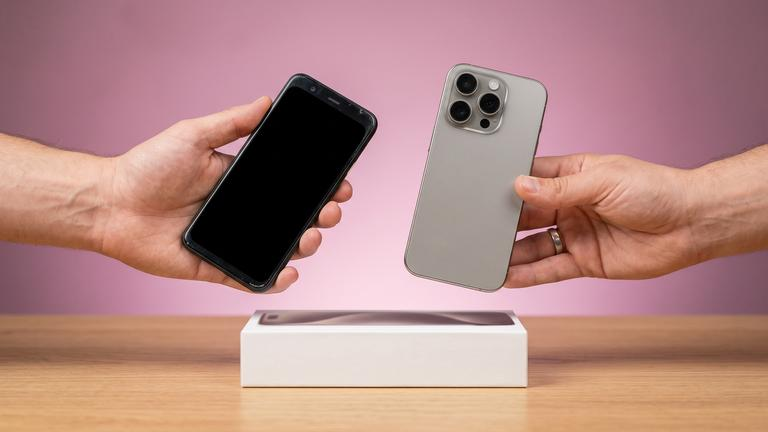
Trading in an old phone can make an upgrade more affordable, but the biggest advertised credit isn’t always the best deal. A manufacturer may reduce the purchase price immediately, a wireless carrier may spread its promotion across monthly bills, and a private buyer may offer more money for the same device.
Note: Dollar amounts in this article are illustrative examples or budget targets, not live Amazon prices. Prices change often, so check the current price on Amazon before you buy.
The important question is how much you actually save after considering the conditions attached to each offer. You might need to activate a specific service plan, maintain eligible service for several months, return your old phone by a deadline, or accept a lower valuation after inspection.
Before choosing a trade-in deal, compare the total cost of upgrading with the realistic value of your current phone. That calculation can help you decide whether trading in, selling privately, or keeping your existing device makes the most financial sense.
How to Evaluate a Phone Trade-In
| Option | Main advantage | Main drawback |
|---|---|---|
| Manufacturer trade-in | Credit may reduce the new phone’s purchase price | Usually subject to eligibility and return conditions |
| Wireless carrier promotion | May provide substantial promotional savings | Can require an eligible plan and monthly bill credits |
| Retailer trade-in | Convenient when purchasing through the same retailer | Credit may be limited to a gift card or store purchases |
| Private sale | Potential to receive more money for your phone | Requires more effort and involves buyer-related risks |
| Keep your existing phone | Avoids the cost of an unnecessary upgrade | Doesn’t provide an immediate trade-in credit |
There is no single best option for every situation. Your decision depends on your phone’s condition, the replacement device you want, the trade-in terms, and how much flexibility you’re willing to give up.
When a Trade-In Offer Is Worth Considering
1. The Credit Is Immediate and Easy to Understand
Manufacturer trade-in programs can be appealing when the credit directly reduces the purchase price of an eligible new device. You can evaluate the savings at checkout rather than waiting for credits to appear on future bills.
For example, Apple’s Trade In program allows eligible devices to be exchanged for credit toward a new purchase or, in applicable cases, an Apple Gift Card. The amount depends on the device and its condition, and estimates may change after inspection.
You can review the Apple Trade In program to understand its current requirements.
This type of offer may be useful if you’ve already decided which phone you want and prefer a straightforward transaction without tying your savings to a wireless carrier’s billing schedule.
Best for: Buyers who know which replacement phone they want and value convenience and predictable costs.
2. The Carrier Deal Beats Your Other Realistic Options
Wireless carriers sometimes advertise large trade-in credits that make an expensive phone appear significantly cheaper. However, the full promotional amount may be spread across multiple billing cycles instead of being deducted immediately.
Before accepting a carrier offer, ask:
- How much credit will appear on each bill?
- How long must you remain eligible to receive all the credits?
- Does the offer require a specific service plan?
- Must you maintain a particular line or account status?
- What happens to the remaining credits if you change plans or leave the carrier?
A carrier promotion can still offer excellent value if the plan already fits your needs and the total cost is competitive.
Best for: Customers who already intend to keep their current carrier and are comfortable meeting the promotion’s requirements.
3. Your Old Phone Has Meaningful Resale Value
Trade-in programs are convenient, but a private sale may produce more money for a newer phone in good condition.
Compare the actual trade-in quote with realistic resale prices for the same model, storage capacity, and condition. Don’t rely on a single seller’s asking price: an advertised price doesn’t guarantee that a buyer will pay that amount.
A private sale also takes time. You may need to create a listing, answer questions, negotiate a price, arrange payment, and safely transfer the device.
Before listing your phone, research comparable models and condition grades. You can browse used and renewed phones on Amazon.com to get another reference point for the replacement-phone market. Listings vary, so compare the exact model, condition, seller, warranty information, and return policy rather than assuming every listing is equivalent.
Best for: Owners of popular, well-maintained phones who are willing to spend extra time selling in exchange for potentially receiving more money.
When a Trade-In Offer Isn’t Worth It
The Advertised Savings Require a Plan You Don’t Need
A carrier may offer a large credit only if you choose a qualifying service plan. If that plan costs more than the one you’d otherwise select, some of the apparent savings can disappear.
Use these simple comparisons:
Trade-in route: New phone cost + additional service costs + fees − promotional credits
Alternative route: New phone cost from another seller + your preferred service cost − realistic resale proceeds
Compare both options over the same period. Count only the service costs that genuinely differ between them, rather than treating your entire phone bill as an additional expense.
Also check whether monthly credits depend on maintaining a particular plan. Leaving early or changing plans could affect the remaining value of the promotion.
Your Phone Doesn’t Qualify for the Quoted Value
A trade-in estimate usually depends on the information you provide about the device. A cracked screen, faulty charging port, battery problem, or incorrect model selection may reduce the final offer or make the phone ineligible.
Read the program’s eligibility rules before accepting a quote. Check how the provider handles revised valuations, whether you can reject a revised offer, and whether the device can be returned to you.
These details become particularly important when the trade-in credit represents a substantial part of the replacement phone’s price.
You’re Giving Up a Phone You Could Keep Using
Sometimes, the most economical decision is not to upgrade.
If your current phone receives security updates, has acceptable battery life, and handles your everyday tasks reliably, keeping it may cost less than purchasing a replacement—even with a generous trade-in offer.
The credit reduces the price of a purchase; it doesn’t automatically make that purchase necessary.
Before trading in your device, consider whether a small repair or a few inexpensive accessories could help you continue using it comfortably. For example, you can compare phone cases on Amazon.com, screen protectors, or USB-C phone chargers if these are items you actually need. Check compatibility with your specific phone before purchasing.
How to Calculate the Real Value of a Trade-In
The easiest way to avoid being distracted by a large promotional number is to compare the same replacement phone across different purchasing options.
Imagine that two sellers offer the same replacement phone for $999 before credits.
| Cost | Offer A: Manufacturer | Offer B: Carrier |
|---|---|---|
| New phone price before credits | $999 | $999 |
| Trade-in or promotional credit | $250 | $800 |
| Phone cost after credit | $749 | $199 |
| Additional plan cost over the comparison period | $0 | $360 |
| Effective cost before other differences | $749 | $559 |
In this hypothetical example, Offer B is $190 cheaper over the comparison period, assuming you qualify for the full credit and the additional $360 is the only difference in plan costs.
However, change one assumption and the result may change. If you would have selected the carrier plan regardless, the incremental plan cost might be $0. If leaving the carrier means losing the remaining credits, that restriction also needs to be considered.
These figures are illustrative only. They do not represent current offers from any company. Taxes, activation fees, financing terms, eligibility rules, and other costs can affect the final outcome.
Compare a Trade-In With a Private Sale
Use this calculation when deciding whether to trade in your old phone or sell it privately:
Net advantage of private sale = realistic resale proceeds − trade-in credit − extra selling costs
For example, suppose you realistically expect a buyer to pay $300, your trade-in offer is $240, and selling costs total $15.
Your potential additional return from selling privately is $45.
That $45—not the full $300 resale price—is the amount to weigh against the time, effort, and risks of a private sale. If the difference is small, the convenience of trading in may be worth more to you.
Manufacturer, Carrier, or Retailer: Which Should You Choose?
Manufacturer Trade-In
Manufacturer programs are worth considering when you’ve already chosen a brand but want to compare purchasing options.
Apple and Samsung have trade-in programs with their own eligibility requirements and valuation rules. Review the official terms before relying on an estimated credit.
- Advantages: Credit may reduce the new purchase cost, the process can be convenient, and the transaction may be easier to evaluate than a carrier promotion.
- Limitations: Credit may apply only to eligible products, the final valuation may change after inspection, and the offer may be lower than a realistic private-sale price.
Official program pages: Apple Trade In and Samsung Trade-In.
Wireless Carrier Trade-In
A carrier promotion may be attractive when its service plan already meets your needs and the credits meaningfully reduce the cost of your replacement phone.
- Advantages: Promotional credits may be substantial, and trade-in and service activation can often be handled in one transaction.
- Limitations: Credits may arrive over time, eligible plans and account conditions apply, and changing providers could affect the remaining value.
Ask the carrier for the complete promotion terms in writing. Compare the total cost over the same period as your other options.
Retailer Trade-In
Some retailers offer store credit or gift cards for eligible electronics. Amazon’s Trade-In program has included eligible cell phones, but accepted devices, values, and benefits depend on current program terms.
Check Amazon Trade-In to see whether your device qualifies under the current conditions.
- Advantages: Convenient if you regularly shop with the retailer, and store credit can be useful for purchases you already planned to make.
- Limitations: Store credit is not the same as cash, device eligibility can vary, and the offer may not be competitive with other options.
Only value a gift card close to its full amount if you expect to use it for purchases you would have made anyway. Also, don’t assume a retailer’s trade-in program qualifies as an Amazon Associates purchase: trade-in transactions and affiliate commissions are separate.
How to Prepare Your Phone Before Trading It In
Before handing over your device, protect your personal information and make sure you understand the program’s deadlines.
Use this checklist:
- Back up your photos, contacts, messages, and other important data.
- Transfer your information to your replacement phone and verify access to important accounts.
- Move your phone number or eSIM according to your carrier’s instructions.
- Remove physical SIM and memory cards, if applicable.
- Sign out of accounts and disable tracking or activation locks as required by the trade-in program.
- Factory-reset your old phone after confirming that your backup and transfer are complete.
- Record the device’s condition and keep your trade-in confirmation and shipping receipt.
- Ship or drop off the device before the program deadline.
Do not reset your phone until you’ve confirmed that your important data and accounts are accessible on the replacement device. Check any outstanding financing or ownership requirements, too, because some programs restrict devices that are leased or still subject to financing obligations.
For additional guidance, consult the Federal Trade Commission’s consumer advice and the specific trade-in provider’s instructions.
Frequently Asked Questions
Are phone trade-in offers worth it?
They can be, especially when the credit is competitive, you already planned to buy the replacement phone, and the offer doesn’t introduce unwanted costs or restrictions. Compare the final cost with realistic private-sale proceeds and other purchasing options.
Is it better to sell a phone or trade it in?
Selling privately may bring in more money, but it requires extra time and effort. Trading in is usually more convenient. Compare the trade-in credit with realistic resale proceeds after accounting for selling costs.
Do carrier trade-in credits arrive all at once?
Not necessarily. Some offers apply an immediate credit, while others spread credits across multiple bills. Check the promotion’s schedule and the conditions required to receive the full amount.
Can I trade in a phone with a cracked screen?
That depends on the program. Some providers may accept damaged devices at a reduced value, while others have stricter requirements. Check the current eligibility rules and valuation before sending the phone.
Does Amazon accept old phones for trade-in?
Amazon Trade-In has included certain cell phones, but eligibility and available benefits can vary. Check the Amazon Trade-In page for current program details.
Should I trade in my phone before buying a replacement?
Not always. Consider your data-transfer needs, return window, and trade-in deadline. Some programs allow you to receive the replacement device before sending your old phone, but you must follow their instructions and deadlines.
Final Verdict: Focus on the Overall Deal, Not the Biggest Credit
A trade-in offer is useful when it reduces the cost of an upgrade you genuinely want without introducing restrictions that outweigh the savings.
Start with manufacturer offers, compare carrier promotions carefully, and consider a private sale if your old phone has meaningful resale value. If you shop through Amazon.com for a replacement phone or accessories, compare the exact model, condition, seller, compatibility, and return terms before buying.
Most importantly, calculate the final cost, understand the eligibility requirements, and make sure you can meet every deadline. The best trade-in isn’t necessarily the one with the biggest advertised credit—it’s the one that leaves you better off after considering the complete deal.
Amazon Affiliate Disclosure: As an Amazon Associate I earn from qualifying purchases.